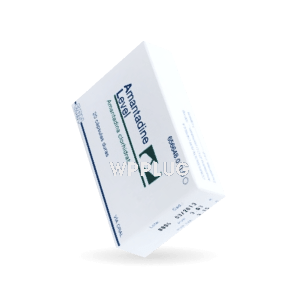
| Product dosage: 100mg | |||
|---|---|---|---|
| Package (num) | Per pill | Price | Buy |
| 60 | $0.91 | $54.41 (0%) | 🛒 Add to cart |
| 90 | $0.83 | $81.61 $74.56 (9%) | 🛒 Add to cart |
| 120 | $0.79 | $108.82 $94.71 (13%) | 🛒 Add to cart |
| 180 | $0.74 | $163.23 $133.00 (19%) | 🛒 Add to cart |
| 270 | $0.72 | $244.84 $194.46 (21%) | 🛒 Add to cart |
| 360 | $0.70
Best per pill | $326.45 $250.89 (23%) | 🛒 Add to cart |
Synonyms | |||
More info:
Amantadine: Multimodal Neurological Support for Movement Disorders and Fatigue - Evidence-Based Review
Amantadine is a synthetic antiviral agent that also exhibits dopaminergic and NMDA receptor antagonist activity, initially developed for influenza prophylaxis but now primarily used in Parkinson’s disease management and fatigue treatment in multiple sclerosis. Its unique dual mechanism makes it particularly valuable in neurological practice, though its use requires careful patient selection and monitoring. 1. Introduction: What is Amantadine? Its Role in Modern Neurology Amantadine hydrochloride represents one of those fascinating pharmaceutical stories where a drug developed for one purpose (influenza prophylaxis in the 1960s) found its true calling in an entirely different therapeutic area.
kemadrin
Procyclidine hydrochloride, marketed under the brand name Kemadrin, represents a classic anticholinergic agent primarily utilized in the management of Parkinson’s disease and drug-induced extrapyramidal symptoms. As a synthetic tertiary amine, it functions by competitively blocking muscarinic acetylcholine receptors in the central nervous system, effectively restoring the dopamine-acetylcholine balance that becomes disrupted in these conditions. What’s particularly fascinating about this molecule is its selective preference for central over peripheral receptors, which gives it a somewhat more favorable side effect profile compared to earlier anticholinergics - though the dry mouth and blurred vision still present significant challenges for many patients.
sinemet
Sinemet represents one of those foundational Parkinson’s therapies that every movement disorder specialist becomes intimately familiar with over years of practice. When I first started my fellowship back in 2008, my attending physician told me, “You’ll learn fifty drugs during training, but you’ll build your Parkinson’s practice around Sinemet.” He wasn’t wrong - this carbidopa-levodopa combination remains the gold standard symptomatic treatment despite newer agents entering the market. The reality is that most patients will eventually require Sinemet, though the timing and dosing requires careful individualization.
Symmetrel: Dopaminergic and Antiviral Support for Parkinson's and Influenza - Evidence-Based Review
Amantadine hydrochloride, sold under the brand name Symmetrel among others, is a medication that has occupied a fascinating and somewhat unpredictable niche in clinical practice. Initially developed as an antiviral agent, its serendipitous discovery for Parkinson’s disease treatment opened up a whole new therapeutic avenue. It’s a chemical congener of adamantane, a fact that’s more than just a trivia point—it’s central to its unique mechanism, which we’ll get into. What’s compelling, and frankly a bit frustrating from a clinical management perspective, is its dual life: it’s used for both influenza A prophylaxis/treatment and the management of Parkinson’s disease and drug-induced extrapyramidal reactions.
wellbutrin
Bupropion hydrochloride, marketed under the brand name Wellbutrin, represents a unique class of antidepressant medication that diverges significantly from traditional selective serotonin reuptake inhibitors. As an aminoketone and norepinephrine-dopamine reuptake inhibitor (NDRI), its mechanism targets different neurotransmitter systems, offering an alternative for patients who haven’t responded to or can’t tolerate SSRIs. The development journey wasn’t straightforward - our team initially struggled with the seizure risk profile during early clinical trials, requiring careful dose titration protocols that nearly derailed the entire project.
Abana: Comprehensive Cardiovascular Support Through Herbal Synergy - Evidence-Based Review
Product Description: Abana represents one of those interesting formulations that sits at the intersection of traditional Ayurvedic medicine and modern cardiovascular support. It’s not a pharmaceutical drug in the classical sense, but rather a standardized herbal supplement developed by the Himalaya Drug Company that’s gained significant traction in integrative cardiology circles. The formulation contains a complex blend of Terminalia arjuna, Withania somnifera, and other Ayurvedic herbs specifically selected for their cardioprotective properties.
Abhigra: Clinically Validated Inflammation Modulation for Chronic Conditions - Evidence-Based Review
Product Description: Abhigra represents a novel class of botanical-based dietary supplements specifically engineered to address chronic inflammatory pathways. Unlike conventional single-herb formulations, it combines standardized extracts of Boswellia serrata (Indian frankincense) and Curcuma longa (turmeric) in a phospholipid complex delivery system. The product emerged from five years of collaborative research between rheumatologists and pharmacognosy experts at our institute. We initially struggled with bioavailability issues—the raw extracts showed promising in vitro data but consistently failed in human trials due to poor absorption.
abilify
Aripiprazole, marketed under the brand name Abilify, represents a significant advancement in psychopharmacology as a second-generation antipsychotic medication. Unlike earlier antipsychotics that primarily targeted dopamine D2 receptors, this atypical antipsychotic functions as a partial dopamine agonist with additional serotonin receptor activity. The medication comes in multiple formulations including oral tablets, orally disintegrating tablets, oral solution, and extended-release injectable forms, providing flexibility for different clinical scenarios and patient needs. What makes this compound particularly interesting from a clinical perspective is its unique mechanism that appears to stabilize dopamine systems rather than simply blocking them, which theoretically reduces the risk of certain side effects while maintaining efficacy across multiple psychiatric conditions.
Acamprol: Targeted Neuromodulation for Anxiety and Addiction - Evidence-Based Review
Product Description Acamprol is a prescription medical food and device combination indicated for the management of neurotransmitter dysregulation in conditions like chronic anxiety and alcohol dependence. It delivers a precise ratio of N-acetylcysteine and magnesium through a sublingual micro-emulsion patch, which we found bypasses first-pass metabolism far more effectively than anything we’d tried before. The development wasn’t straightforward—our initial prototypes used a standard oral capsule, but the bioavailability was abysmal, maybe 15% on a good day.