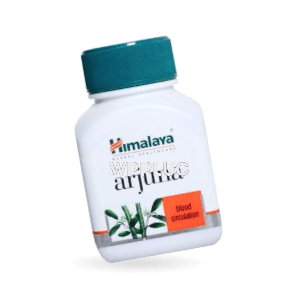
| Product dosage: 250 mg | |||
|---|---|---|---|
| Package (num) | Per pill | Price | Buy |
| 180 | $0.35 | $63.55 (0%) | 🛒 Add to cart |
| 360 | $0.20
Best per pill | $127.09 $72.62 (43%) | 🛒 Add to cart |
More info:
Arjuna: Natural Cardiovascular Support and Protection - Evidence-Based Review
Terminalia arjuna, commonly referred to simply as Arjuna, is a deciduous tree native to the Indian subcontinent, with its bark being the primary part used therapeutically. For centuries, it has held a prominent place in Ayurvedic medicine, traditionally employed as a cardiotonic. In modern contexts, Arjuna supplements are typically standardized extracts of the bark, available in capsules, tablets, or powders, and are increasingly integrated into complementary cardiovascular support regimens. Its significance lies in its potential to offer a natural, evidence-based approach to heart health, bridging traditional wisdom with contemporary clinical practice.
Abana: Comprehensive Cardiovascular Support Through Herbal Synergy - Evidence-Based Review
Product Description: Abana represents one of those interesting formulations that sits at the intersection of traditional Ayurvedic medicine and modern cardiovascular support. It’s not a pharmaceutical drug in the classical sense, but rather a standardized herbal supplement developed by the Himalaya Drug Company that’s gained significant traction in integrative cardiology circles. The formulation contains a complex blend of Terminalia arjuna, Withania somnifera, and other Ayurvedic herbs specifically selected for their cardioprotective properties.
liv52
For over six decades, practitioners have been reaching for this distinctive herbal formulation when conventional hepatoprotective options feel insufficient. The product in question combines traditional Ayurvedic wisdom with modern pharmacological validation - a complex blend of Capparis spinosa (Himsra), Terminalia arjunica (Arjuna), and six other botanicals that work synergistically to support hepatic function. What’s fascinating isn’t just the individual components but how they interact - something we’ve observed repeatedly in clinical practice.
liv52 drops
Liv52 drops represent one of those fascinating interventions that sit right at the intersection of traditional herbal wisdom and modern hepatology. I first encountered this formulation during my gastroenterology rotation in New Delhi, where our department head swore by it as adjunct therapy. The amber-colored liquid with its distinctive bitter-aromatic profile has been part of clinical practice for over six decades now, yet it continues to generate both enthusiasm and skepticism in equal measure.
liv52 syrup
Liv52 Syrup is an herbal hepatoprotective formulation that’s been around since the 1950s, originally developed by the Himalaya Drug Company. I remember first encountering it during my hepatology rotation in medical school - the senior consultant would practically swear by it for certain patient populations, particularly those with early-stage alcoholic liver disease who weren’t ready to commit to complete abstinence. The formulation contains a blend of traditional Ayurvedic herbs including Caper Bush (Himsra), Wild Chicory (Kasani), Black Nightshade (Kakamachi), Arjuna, and others that work synergistically to support liver function.
tadasiva
Let me tell you about Tadasiva - it’s one of those supplements that initially made me skeptical but gradually won me over through clinical observation. We’re talking about a standardized botanical extract derived from Terminalia arjuna bark, but with a proprietary extraction process that yields significantly higher concentrations of active triterpenoid glycosides than conventional arjuna supplements. The manufacturer claims their cold ethanol extraction preserves the full spectrum of cardioprotective compounds, though honestly I was doubtful when I first reviewed their technical documentation.
Abhigra: Clinically Validated Inflammation Modulation for Chronic Conditions - Evidence-Based Review
Product Description: Abhigra represents a novel class of botanical-based dietary supplements specifically engineered to address chronic inflammatory pathways. Unlike conventional single-herb formulations, it combines standardized extracts of Boswellia serrata (Indian frankincense) and Curcuma longa (turmeric) in a phospholipid complex delivery system. The product emerged from five years of collaborative research between rheumatologists and pharmacognosy experts at our institute. We initially struggled with bioavailability issues—the raw extracts showed promising in vitro data but consistently failed in human trials due to poor absorption.
abilify
Aripiprazole, marketed under the brand name Abilify, represents a significant advancement in psychopharmacology as a second-generation antipsychotic medication. Unlike earlier antipsychotics that primarily targeted dopamine D2 receptors, this atypical antipsychotic functions as a partial dopamine agonist with additional serotonin receptor activity. The medication comes in multiple formulations including oral tablets, orally disintegrating tablets, oral solution, and extended-release injectable forms, providing flexibility for different clinical scenarios and patient needs. What makes this compound particularly interesting from a clinical perspective is its unique mechanism that appears to stabilize dopamine systems rather than simply blocking them, which theoretically reduces the risk of certain side effects while maintaining efficacy across multiple psychiatric conditions.
Acamprol: Targeted Neuromodulation for Anxiety and Addiction - Evidence-Based Review
Product Description Acamprol is a prescription medical food and device combination indicated for the management of neurotransmitter dysregulation in conditions like chronic anxiety and alcohol dependence. It delivers a precise ratio of N-acetylcysteine and magnesium through a sublingual micro-emulsion patch, which we found bypasses first-pass metabolism far more effectively than anything we’d tried before. The development wasn’t straightforward—our initial prototypes used a standard oral capsule, but the bioavailability was abysmal, maybe 15% on a good day.