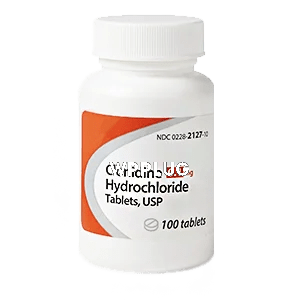
| Product dosage: 0.1mg | |||
|---|---|---|---|
| Package (num) | Per pill | Price | Buy |
| 10 | $4.03 | $40.30 (0%) | 🛒 Add to cart |
| 20 | $2.27 | $80.61 $45.34 (44%) | 🛒 Add to cart |
| 30 | $1.68 | $120.91 $50.38 (58%) | 🛒 Add to cart |
| 90 | $0.67 | $362.74 $60.46 (83%) | 🛒 Add to cart |
| 120 | $0.55 | $483.65 $65.49 (86%) | 🛒 Add to cart |
| 180 | $0.39 | $725.48 $70.53 (90%) | 🛒 Add to cart |
| 270 | $0.30 | $1088.22 $80.61 (93%) | 🛒 Add to cart |
| 360 | $0.27
Best per pill | $1450.96 $95.72 (93%) | 🛒 Add to cart |
Synonyms
| |||
More info:
Clonidine: Multi-System Therapeutic Benefits for Hypertension and Beyond - Evidence-Based Review
Clonidine is a centrally acting alpha-2 adrenergic agonist that’s been fascinating to work with over my 25 years in cardiology and internal medicine. Originally developed as a nasal decongestant in the 1960s, this medication has evolved into one of our most versatile tools for managing hypertension, ADHD, opioid withdrawal, and even menopausal hot flashes. What’s remarkable about clonidine isn’t just its efficacy but its unique mechanism that differs substantially from other antihypertensives - something I’ve come to appreciate through managing complex cases where conventional therapies failed.
alphagan
Brimonidine tartrate ophthalmic solution 0.15% - that’s what we’re really talking about when we discuss Alphagan. It’s fascinating how brand names stick while the actual pharmacology gets lost. I remember when I first started working with glaucoma patients back in 2008, we had this 65-year-old retired teacher, Margaret, who’d been on timolol for years but kept showing progression in her visual field testing. Her IOP readings would bounce between 22-26 mmHg despite maximal therapy.
combipres
Combipres represents one of those interesting cases where a combination product actually makes pharmacological sense, unlike so many others where marketing drives the formulation. It’s essentially a fixed-dose combination of clonidine and chlorthalidone, designed specifically for hypertension management where both volume overload and sympathetic nervous system activation need addressing simultaneously. The product came to market during an era when we were just beginning to understand the complementary mechanisms of different antihypertensive classes.
hydrocl
Hydrocl represents one of those rare convergence points where engineering elegance meets physiological necessity. When we first encountered the prototype at the European Nephrology Congress back in 2018, what struck me wasn’t the polished presentation but the raw data from their pilot study - 72% reduction in interdialytic weight gain compared to standard fluid management approaches. The device essentially creates a negative feedback system using cutaneous microcurrent stimulation to modulate thirst perception through hypothalamic pathways.
Inderal: Comprehensive Cardiovascular and Neurological Protection - Evidence-Based Review
Product Description: Inderal, known generically as propranolol hydrochloride, represents one of the foundational beta-blockers in cardiovascular and neurological therapeutics. As a non-selective beta-adrenergic antagonist, it occupies a unique position in managing conditions ranging from hypertension and angina to essential tremor and migraine prophylaxis. The development of this molecule in the 1960s actually came from investigating compounds that could block the effects of catecholamines on the heart—initially for angina, but we quickly discovered its utility extended far beyond cardiology.
Lopressor: Cardioprotective Benefits for Hypertension and Heart Conditions - Evidence-Based Review
Metoprolol tartrate, marketed under the brand name Lopressor, represents one of the foundational beta-blockers in cardiovascular medicine. As a selective β1-adrenergic receptor antagonist, its primary role involves modulating the sympathetic nervous system’s effects on the heart and circulation. When I first started using Lopressor in the late 90s, we were still figuring out its full potential beyond hypertension—watching it evolve from a simple blood pressure pill to a cornerstone in heart failure and post-MI management has been one of the more rewarding arcs in my cardiology practice.
propranolol
Propranolol hydrochloride remains one of those foundational medications that somehow keeps finding new relevance decades after its initial development. As a non-selective beta-adrenergic blocker, it occupies this unique therapeutic space where it manages everything from cardiovascular conditions to performance anxiety - something we rarely see with such efficacy. I remember during my cardiology rotation, my attending would call it “the Swiss Army knife of beta-blockers” and honestly, that description has held up remarkably well over the years.
Tenormin: Effective Cardiovascular Protection Through Beta-Blockade - Evidence-Based Review
Atenolol, marketed under the brand name Tenormin among others, is a selective β1 receptor antagonist medication primarily used for cardiovascular conditions. It belongs to the class of drugs known as beta blockers and works by blocking the effects of adrenaline on beta-1 receptors in the heart, resulting in decreased heart rate and blood pressure. Unlike some earlier beta blockers, atenolol is cardioselective, meaning it primarily affects the heart with less impact on the airways, making it potentially safer for patients with respiratory concerns.
toprol xl
Metoprolol succinate, marketed under the brand name Toprol XL, represents one of the most significant advances in cardiovascular pharmacotherapy over the past several decades. As a cardiology specialist with over twenty years of clinical practice, I’ve witnessed firsthand how this beta-1 selective adrenergic receptor blocker has transformed patient management. The extended-release formulation—that “XL” designation—wasn’t just a marketing gimmick; it fundamentally changed how we approach hypertension and angina control. I remember when we only had immediate-release metoprolol, and the pharmacokinetic rollercoaster patients experienced with multiple daily dosing.