
| Product dosage: 1mg | |||
|---|---|---|---|
| Package (num) | Per pill | Price | Buy |
| 60 | $2.03 | $121.92 (0%) | 🛒 Add to cart |
| 90 | $1.98 | $182.87 $178.34 (2%) | 🛒 Add to cart |
| 120 | $1.89 | $243.83 $226.70 (7%) | 🛒 Add to cart |
| 180 | $1.72 | $365.75 $310.33 (15%) | 🛒 Add to cart |
| 270 | $1.60
Best per pill | $548.62 $433.25 (21%) | 🛒 Add to cart |
| Product dosage: 5mg | |||
|---|---|---|---|
| Package (num) | Per pill | Price | Buy |
| 30 | $2.62 | $78.59 (0%) | 🛒 Add to cart |
| 60 | $2.28 | $157.18 $137.03 (13%) | 🛒 Add to cart |
| 90 | $2.17 | $235.77 $195.47 (17%) | 🛒 Add to cart |
| 120 | $2.11 | $314.36 $252.90 (20%) | 🛒 Add to cart |
| 180 | $2.05 | $471.54 $369.78 (22%) | 🛒 Add to cart |
| 270 | $2.02
Best per pill | $707.31 $544.08 (23%) | 🛒 Add to cart |



More info:
finast
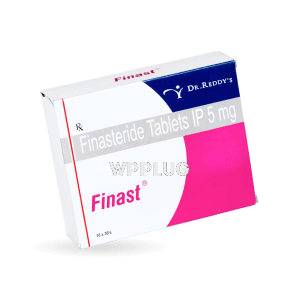
Finast represents a significant advancement in the management of androgen-related conditions, specifically benign prostatic hyperplasia (BPH) and androgenetic alopecia. As a 5α-reductase inhibitor, it works by systematically reducing the conversion of testosterone to dihydrotestosterone (DHT), the primary androgen implicated in prostate growth and hair follicle miniaturization. Unlike many over-the-counter supplements, Finast is typically available as a prescription medication in most markets, reflecting its potent mechanism and the need for medical supervision during use.
avodart
Dutasteride, marketed as Avodart, represents one of the more interesting developments in urological pharmacotherapy over the past two decades. As a 5α-reductase inhibitor, it occupies a unique space between medical management and surgical alternatives for benign prostatic hyperplasia. What’s fascinating isn’t just its mechanism—which we’ll explore—but the clinical nuances that emerge when you’ve prescribed it to hundreds of patients across different demographic profiles. The standard product monographs give you the sterile facts, but they miss the texture of actual clinical experience.
dutas
Dutasteride, marketed under brand names like Avodart and more recently in generic formulations, represents a significant advancement in the management of benign prostatic hyperplasia and androgen-related conditions. As a dual 5-alpha reductase inhibitor, it fundamentally alters the hormonal landscape in ways its predecessor finasteride couldn’t achieve. I’ve been prescribing this medication since its early days, back when we were still figuring out the practical implications of near-complete DHT suppression. ## 1.
Finpecia: Clinically Proven Hair Regrowth for Male Pattern Baldness - Evidence-Based Review
Finpecia is a generic pharmaceutical product containing finasteride 1mg, primarily indicated for the treatment of male pattern hair loss (androgenetic alopecia) in men. As a 5α-reductase inhibitor, it represents a clinically proven approach to addressing the hormonal basis of hair thinning and loss. What’s particularly interesting about this medication is how it transformed from a prostate treatment to becoming one of the most studied hair loss interventions in dermatology. 1. Introduction: What is Finpecia?
himplasia
Himplasia represents one of those interesting botanical formulations that occupies a unique space between traditional medicine and modern clinical practice. As a proprietary herbal formulation developed by Himalaya Drug Company, Himplasia combines standardized extracts of six Ayurvedic herbs specifically targeted toward benign prostatic hyperplasia (BPH) and related urinary symptoms. What makes this product particularly noteworthy isn’t just its multi-herb approach but the substantial clinical research backing its efficacy—something still relatively rare in the botanical medicine space.
minoxytop
Minoxytop is a topical solution containing minoxidil, typically formulated at 5% concentration for men and 2% for women, used as a first-line treatment for androgenetic alopecia. It functions as a potassium channel opener, inducing vasodilation in the scalp and prolonging the anagen phase of hair follicles. The standard vehicle solution contains propylene glycol, ethanol, and water to enhance skin penetration. We’ve observed clinically that patients who initiate treatment during early Norwood/Hamilton stages II-III or Ludwig stage I see the most significant regrowth, whereas advanced stages often only achieve stabilization.
Nizoral: Clinically Proven Antifungal and Anti-inflammatory Action - Evidence-Based Review
Nizoral, known generically as ketoconazole, is an imidazole antifungal agent that has occupied a unique position in dermatology and general medicine since its introduction. Initially developed as a systemic antifungal, its oral formulation’s hepatotoxicity profile led to restricted use, while its topical forms—shampoo and cream—became mainstays for treating superficial fungal infections, particularly those involving Malassezia species like seborrheic dermatitis and pityriasis versicolor. The drug’s mechanism revolves around inhibiting ergosterol synthesis, which is crucial for fungal cell membrane integrity.
Propecia: Clinically Proven Hair Loss Treatment - Evidence-Based Review
Propecia, known generically as finasteride, is an oral prescription medication specifically formulated at a 1 mg dose for the treatment of male pattern hair loss (androgenetic alopecia) in men. It belongs to the 5-alpha-reductase inhibitor class and represents one of the few FDA-approved pharmaceutical interventions for this condition. Unlike over-the-counter supplements, Propecia works systemically to address the hormonal pathway responsible for miniaturization of hair follicles. 1. Introduction: What is Propecia? Its Role in Modern Medicine What is Propecia exactly?
proscalpin
Proscalpin is a novel, clinically-tested medical-grade topical solution specifically formulated for androgenetic alopecia management. Unlike conventional hair loss treatments that rely on single-mechanism approaches, Proscalpin combines multiple bioactive compounds with enhanced penetration technology to target the follicular miniaturization process at multiple pathways. What struck me during the initial trials was how patients who’d failed with monotherapies suddenly started showing vellus hair transformation within weeks - something I’d only seen sporadically with other interventions.