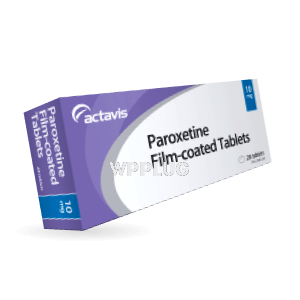
| Product dosage: 20mg | |||
|---|---|---|---|
| Package (num) | Per pill | Price | Buy |
| 30 | $1.48 | $44.34 (0%) | 🛒 Add to cart |
| 60 | $1.16 | $88.67 $69.53 (22%) | 🛒 Add to cart |
| 90 | $1.06 | $133.01 $95.72 (28%) | 🛒 Add to cart |
| 120 | $1.01 | $177.34 $120.91 (32%) | 🛒 Add to cart |
| 180 | $0.95 | $266.01 $170.29 (36%) | 🛒 Add to cart |
| 270 | $0.92 | $399.02 $247.87 (38%) | 🛒 Add to cart |
| 360 | $0.90
Best per pill | $532.02 $323.45 (39%) | 🛒 Add to cart |
Synonyms
| |||
Similar products

More info:
Paroxetine: Effective Management of Depression and Anxiety Disorders - Evidence-Based Review
Paroxetine is a selective serotonin reuptake inhibitor (SSRI) antidepressant medication widely prescribed for managing major depressive disorder, various anxiety disorders, and other psychiatric conditions. As one of the most studied SSRIs, it plays a significant role in modern psychopharmacology due to its potent effects on serotonin neurotransmission. 1. Introduction: What is Paroxetine? Its Role in Modern Medicine Paroxetine, marketed under brand names such as Paxil and Seroxat, belongs to the selective serotonin reuptake inhibitor class of antidepressants.
abilify
Aripiprazole, marketed under the brand name Abilify, represents a significant advancement in psychopharmacology as a second-generation antipsychotic medication. Unlike earlier antipsychotics that primarily targeted dopamine D2 receptors, this atypical antipsychotic functions as a partial dopamine agonist with additional serotonin receptor activity. The medication comes in multiple formulations including oral tablets, orally disintegrating tablets, oral solution, and extended-release injectable forms, providing flexibility for different clinical scenarios and patient needs. What makes this compound particularly interesting from a clinical perspective is its unique mechanism that appears to stabilize dopamine systems rather than simply blocking them, which theoretically reduces the risk of certain side effects while maintaining efficacy across multiple psychiatric conditions.
amitriptyline
Amitriptyline is a tricyclic antidepressant (TCA) that has been a cornerstone in psychiatric and pain management for decades. Originally developed in the 1960s for depression, its utility has expanded significantly due to its multifaceted pharmacological profile. It’s not just an antidepressant anymore—we use it for neuropathic pain, migraine prophylaxis, and even functional gastrointestinal disorders. The drug’s staying power in an era of newer antidepressants speaks volumes about its efficacy when used appropriately.
antivert
Product Description: Antivert (Meclizine Hydrochloride) Antivert represents one of the most reliable vestibular suppressants in clinical practice, specifically formulated as meclizine hydrochloride in oral tablet form. This antihistamine medication has demonstrated consistent efficacy in managing symptoms associated with various forms of vertigo and motion sickness through its central anticholinergic and H1-receptor blocking properties. The standard formulation typically contains 12.5 mg, 25 mg, or 50 mg of meclizine hydrochloride per tablet, with bioavailability studies showing peak plasma concentrations within 1-2 hours post-administration and an elimination half-life of approximately 6 hours in healthy adults.
atarax
Atarax represents one of those interesting cases where an established pharmaceutical agent gets rediscovered through new clinical applications. Originally developed as an antihistamine in the 1950s, hydroxyzine hydrochloride—the active component in Atarax—has demonstrated utility far beyond its initial allergy indications. What’s fascinating is how this molecule’s dual mechanism of action makes it particularly valuable in managing both physiological and psychological manifestations of stress-related conditions. The way it modulates both histamine and serotonin pathways creates this unique therapeutic profile that’s become increasingly relevant in modern practice.
bupron sr
Product Description: Bupron SR is a sustained-release formulation of bupropion hydrochloride, classified as an aminoketone antidepressant and smoking cessation aid distinct from SSRIs. The SR (sustained-release) delivery system provides biphasic absorption over 12 hours, maintaining steadier plasma concentrations than immediate-release formulations while offering more flexible dosing than the 24-hour XL version. We initially developed this intermediate-release profile specifically for patients who experienced nighttime activation with once-daily formulations but struggled with TID immediate-release compliance.
bupropion
Bupropion is an atypical antidepressant belonging to the aminoketone class, structurally distinct from SSRIs and TCAs. It functions primarily as a norepinephrine-dopamine reuptake inhibitor with minimal serotonergic activity, which explains its unique clinical profile. We’ve been using it since the 1980s, but honestly didn’t fully appreciate its mechanisms until the late 90s. Key Components and Bioavailability Bupropion The molecular structure (β-keto-amphetamine) gives it that stimulant-like effect without actual amphetamine properties. We use three main formulations: immediate-release (IR), sustained-release (SR), and extended-release (XL).
bystolic
Bystolic represents one of those interesting cases in cardiovascular pharmacology where we stumbled into something more valuable than we initially anticipated. When I first started prescribing nebivolol back in 2008, most of us viewed it as just another beta-blocker option for hypertension. But over the past fifteen years, I’ve watched this medication reveal dimensions that frankly surprised many cardiologists, myself included. The development team at Forest Laboratories initially focused on its vasodilatory properties, but the real clinical benefits emerged in areas we hadn’t fully anticipated during Phase III trials.
coreg
Coreg, known generically as carvedilol, is a beta-blocker with additional alpha-1 blocking properties, primarily used in cardiovascular medicine. It’s not a dietary supplement but a prescription medication approved for treating heart failure, left ventricular dysfunction following myocardial infarction, and hypertension. The unique dual mechanism sets it apart from traditional beta-blockers, offering both hemodynamic benefits and potential antioxidant effects. Coreg: Comprehensive Management of Heart Failure and Hypertension - Evidence-Based Review 1. Introduction: What is Coreg?
